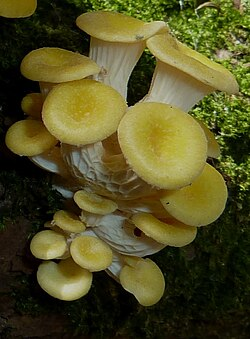
The golden oyster mushroom is a highly coveted fungal variety originally from eastern Asia. It is relatively easy to grow and has a pretty great flavor, which is why it has become popular and now a major threat in North America.
Mushroom grow kit suppliers began selling the golden oyster mushroom in the early 2000s because of the high demand for an easy-to-grow and delicious mushroom. Fast forward to today and the golden oyster mushroom has escaped cultivation facilities (and home grows) to wreak havoc on local forests and fungi pathways - especially in the Northeastern USA.
The USDA officially declared the golden oyster mushroom an invasive species and local communities are working hard to fight back through strategic growth of local fungi varieties. Their aim is to reverse the weakened fungi diversity in local communities by introducing mushrooms that are supposed to grow in these areas. Many mushroom grow kit suppliers are still selling golden oyster mushroom kits and fungi activists are none too happy. The cry for biodiversity and healthy forests over profit is a strong message fungi advocates across the country hope is heard.
The golden oyster mushroom (GOM) was at first just a popular choice amongst the mushroom growing community, but that popularity is exactly what made it into the threat it is today. Too much of a good thing can turn bad quickly.
This particular species of mushroom is relatively easy to grow and has a pretty fantastic flavor. Therefore, it became readily available in the form of at-home grow kits. This all started back in the early 2000s. Since then, it has run rampant outside of home grows and larger grow facilities to take over local wild fungi communities. As of 2025, the GOM has been found in 25 states and 1 Canadian province (USDA). More than its current hold on American fungi communities, it shows no signs of slowing its expansion.
But how exactly did this happen? People grow unique varieties of mushrooms all the time. Why is the golden oyster mushroom the seemingly only problematic one? Mycology expert Aishwarya Veerabahu theorizes that the GOM spreads so quickly because it releases billions of spores which get picked up in the wind (NPR). On top of that, people keep buying and growing the mushroom grow kits. That is certainly not helping the issue. Veerabahu goes as far as to urge people NOT to buy golden oyster mushroom grow kits (NPR).
The golden oyster mushroom grows so rapidly and so easily that it is pushing out native fungi therefore decreasing biodiversity of the affected areas. This can have a cascading effect as everything in nature affects one another. For example, could overgrown GOMs change habitats that birds and other mammals rely on? Native fungi are essential to nutrient-cycling and soil formation to help make habitats for wildlife. If they have nowhere safe to live or nothing to eat, they might move on, then it keeps going up the food chain. No birds to eat? Ok, bigger predators now struggle for food and so on until it finally reaches humans.
To continue the discussion above of reduction of fungal diversity, we can go even farther to how golden mushroom overgrowth can be incredibly harmful to forests (source). While golden oysters totally take over logs, stumps, and trees, it does not leave room for native mushroom varieties. These native mushrooms are absolutely needed to maintain the delicate balance of the forest ecosystem. Wood decay rates can change which leads to differences in soil formation and carbon emissions. Our local forests are already at risk due to global warming, a golden oyster mushroom takeover is certainly not helping.
The northeastern USA has ideal conditions for golden oyster mushrooms to flourish. There are many hardwood forests, lots of rain, high humidity, and lots of people using golden oyster grow kits. All together, this allows the golden oyster mushroom to spread like wildfire.
This is about more than just people who love or even kind of like mushrooms, this is about all of us and our local ecosystems. The invasive golden oyster mushroom is pushing out native fungi varieties and changing our forests for the worse. Sure, we would love to be able to safely grow this mushroom, but it is just not in the cards with the current situation. We cannot just forage eat a bunch of golden oyster mushrooms to solve this problem. We need a concentrated effort to NOT GROW golden oyster mushrooms and instead grow native varieties that can benefit the local community.
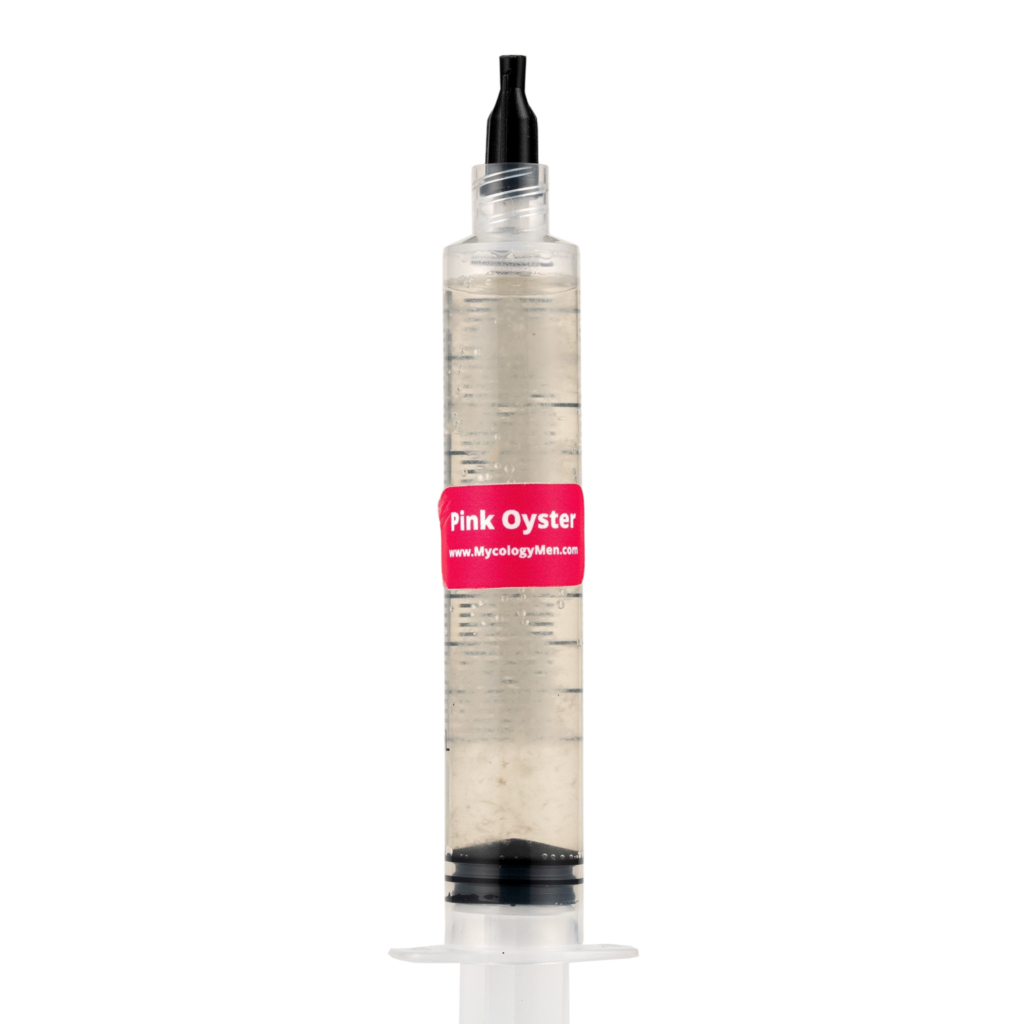
Pink Oyster Liquid Culture by Mycology Men
Here are some mushroom varieties that are not considered invasive in North America. You can safely grow these at home without worry of harming your local community.